

ENGINE TEMPERATURE CHECK
IMPORTANT: The engine temperatures listed below are based on an intake water temperature of 70° ± 10°F (21° ± 3°C).
Install correct propeller and place outboard in a test tank or in the water. Start outboard and run at 3000 RPM in FORWARD gear for at least five minutes. Remember, running outboards at high speeds in test tanks may disrupt water flow to gearcase water intakes. Make sure the outboard has adequate water flow.
When servicing the propeller, always shift the outboard to NEUTRAL, turn the key switch OFF, and twist and remove all spark plug leads so the engine cannot be started accidentally
Reduce speed to IDLE for five minutes. Check IDLE operating temperature.
Increase speed to 5000 RPM and check temperature.
If engine temperatures are not within range, troubleshoot cooling system.
Software Method
Use Evinrude Diagnostics software to read temperature displays.

007373
Monitor Screen
Typical temperature sensor readings at IDLE speed should be 167°F ± 5°F (73°C ± 3°C).
Typical temperature sensor readings at WOT speed should be 122°F ± 10°F (50°C ± 5°C).
Operating temperature must not exceed 212°F (100°C).
Pyrometer Method
Use a Temperature Gun, P/N 772018, or a digital pyrometer to measure the outboard’s operating temperatures.
Measure temperature of the thermostat housing at the top of cylinder head.
Typical pyrometer readings at IDLE speed should be 135°F ± 10°F (57°C ± 5°C).
Typical pyrometer readings at WOT speed should be 110°F ± 10°F (43°C ± 5°C).
IMPORTANT: If you get low or inaccurate readings with a digital pyrometer, coat the probe location with Thermal Joint Compound, P/N 322170.
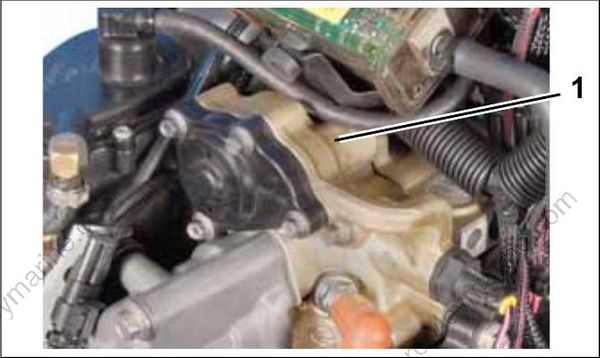
007374
Thermostat housing
IMPORTANT: Digital pyrometer or temperature gun measurements may be slightly lower than software temperature readings.
Idle Operating Temperature
Troubleshooting (Below Range)
If engine IDLE temperature is below operating range, 167°F ± 5°F (73°C ± 3°C), check thermostat and pressure relief valve operation.
Thermostat Inspection
Check position of thermostat seal and how thermostat seals against cylinder head. Seal must be properly fitted to flange of thermostat.
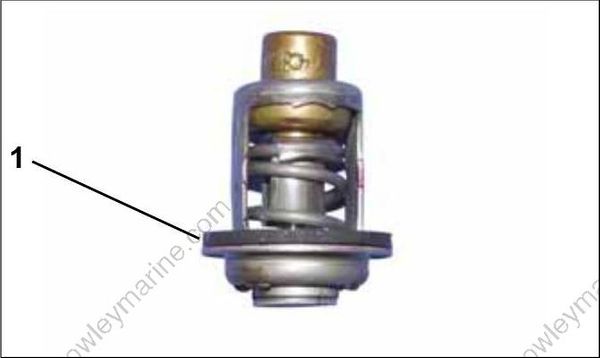
006401
1.Thermostat seal
Check thermostat for cracks, heat damage, or signs of corrosion. Check for proper operation. Thermostat opens at 143°F (62°C).
Refer to THERMOSTAT AND PRESSURE RELIEF VALVE SERVICING on p. 190.
Pressure Relief Valve Inspection
The pressure relief valve should be closed at IDLE speed. Water should not flow past the plunger and seal.
Start the outboard and check IDLE operating temperature.
If IDLE temperature is too low, check pressure relief valve plunger and seal for damage or debris that could prevent the valve from closing completely.
If IDLE temperature is still below operating range, replace pressure relief valve assembly and plunger seal.
To test pressure relief valve operation, monitor temperature at the thermostat housing with Temperature Gun, P/N 772018, or digital pyrometer. Confirm normal IDLE operating temperature.
Slowly increase engine speed from IDLE, up through 3500 RPM.
Engine temperature should decrease from normal IDLE temperatures as pressure relief valve opens. Valve should open between 2800-3200 RPM.
If temperature decreases at a lower RPM, replace pressure relief valve assembly.
Refer to THERMOSTAT AND PRESSURE RELIEF VALVE SERVICING on p. 190.
