

MOUNTING HEIGHT
Your Yamaha Jet Drive must be mounted 6" to 7" higher on the transom than propeller-driven outboards. Therefore, optimum mounting for 15" shafts is on a 20" transom; and for 20" shafts, a 25" transom.
The positioning of motor height is important and must be done carefully. One-quarter inch above the optimum location will allow air to enter the pump and will result in cavitation and power loss. Too low a setting will result in unnecessary drag, water spray, and reduction in speed.
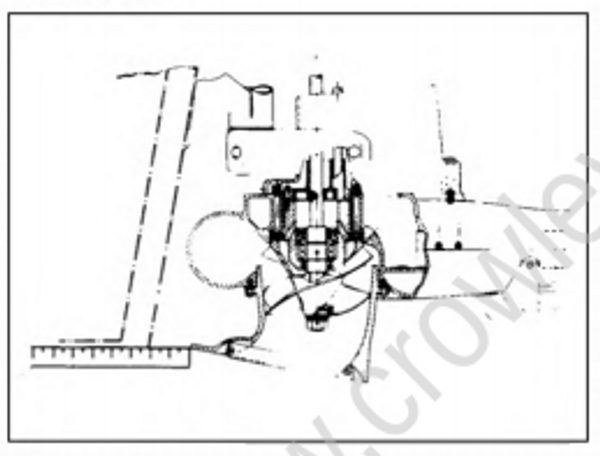
The initial height setting is accomplished by placing a yardstick or other straightedge against the boat bottom (not the keel). The top of the leading edge of the water intake is adjusted to line up with the top edge of the straightedge
TEST RUNNING
When starting your motor for the first time, make sure water comes out the small hole at the rear, starboard side of the motor, just below the powerhead. If no water exits with in a short period of time, shut off the motor and consult your dealer.
After making the initial motor-height setting, it is time to test-run the boat. If cavitation occurs (air enters the pump, which causes loss of thrust and motor overrevving), then you must lower the engine 1/4" at a time until smooth operation is obtained.
If smooth operation is obtained with the initial setting, you should raise the motor in 1/4" steps until cavitation does occur. Then lower the motor 1/4", and mark and lock that location. This height setting will never need to be changed, regardless of the load being carried.
Slight cavitation on sharp turns or in rough water is acceptable, but excessive cavitation is harmful to both motor and pump, and should be avoided.
The motor tilt pin should be set so the engine is in a vertical position when the boat is plan ing. If the boat rides bow-high, or tends to be stern heavy, tilt the motor down one step. This will point the jet stream lower, giving added lift to the stern.
If the tilt angle is changed, then the motor height must be rechecked.
TRANSOM ELEVATORS
In some applications, an elevated transom may be required for proper motor height. When using a bolted-on bracket, set the intake height 1/2" below the bottom of the boat in order to obtain the widest range of adjustability, as shown.
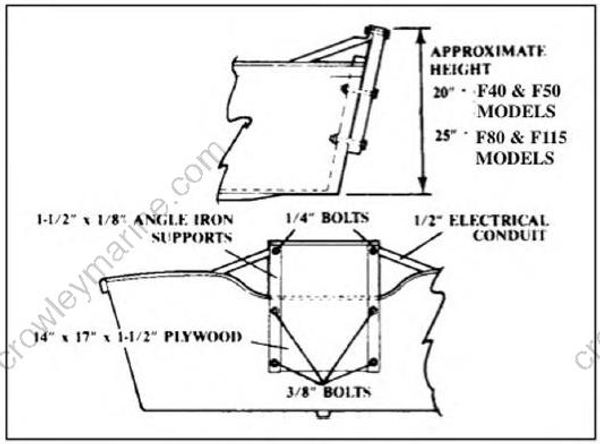
Glue two pieces of 3/4" exterior plywood together, using waterproof glue. Clamp or nail.
Bolt to transom at height shown. Use zinc plated hardware, with flat washers on both sides.
