

Sacrificial Anodes
Galvanic corrosion occurs in fresh or salt water. Salt, brackish, and polluted water can accelerate corrosion. “Sacrificial” anodes are intended to protect the underwater metal components of the outboard from galvanic corrosion.
Outboards are equipped with three sacrificial anodes.
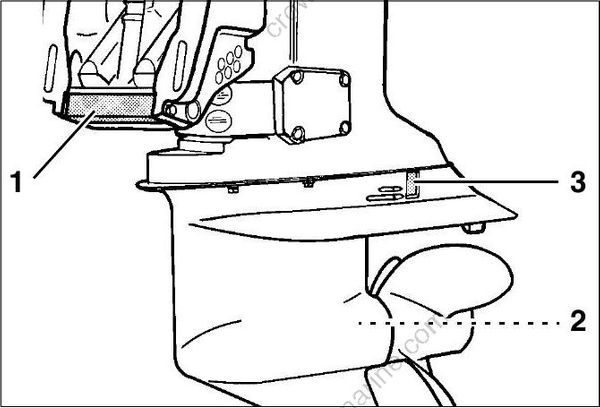
- Stern bracket anode
- Propeller shaft bearing housing anode (inside of gearcase housing)
- Gearcase housing anode
Visually inspect anodes and metal components below water level. Erosion of anodes is normal and indicates the anodes are functioning properly.
IMPORTANT: Anodes that are not eroding may indicate that the anodes are not properly grounded. Anodes and the mounting screws must be clean and tight for effective corrosion protection.
For best anode performance:
- Replace all anodes that have eroded or disintegrated to two-thirds of their original size.
- Do not paint or apply protective coatings to anodes or anode fasteners.
- Avoid using metal-based antifouling paint on the boat or outboard.
Testing Procedure – Continuity
Connect meter leads between engine ground and anode surface.
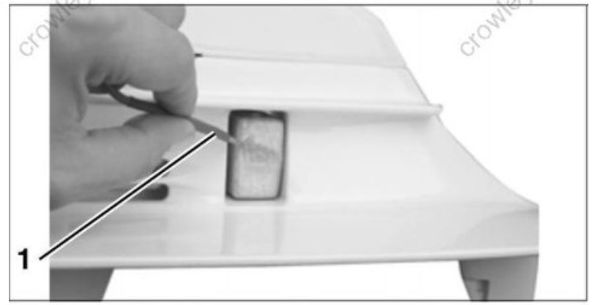
- Meter lead to anode
The multimeter should indicate little or no resistance. If resistance is high, check the following:
- Remove the anode and clean the area where the anode is installed.
- Clean the mounting screws.
- Install the anode and do the test again.
Metallic Component Protection
Exterior Finishes
Maintain the outboard’s exterior finish to prevent corrosion and reduce oxidation.
• Use automotive wax to protect the outboard’s exterior finish from oxidation.
• Clean regularly using clean water and mild detergent soap.
• Touch-up damage to painted surfaces promptly.
The upper and lower motor covers use molded-in color technology. Surface scratches on the covers can be polished out with buffing compound.
Minor scratches can be repaired as follows:
• Sand the affected area with 800-grit sandpaper.
• Wet sand the area with 1200-grit sandpaper.
• Polish with a fine grade of buffing compound.
