

MANUAL TILT
IMPORTANT: Use the tilt grip to tilt the outboard. Do not use the tiller handle as a lever.
Tilt UP
Move tilt/run lever to TILT position.
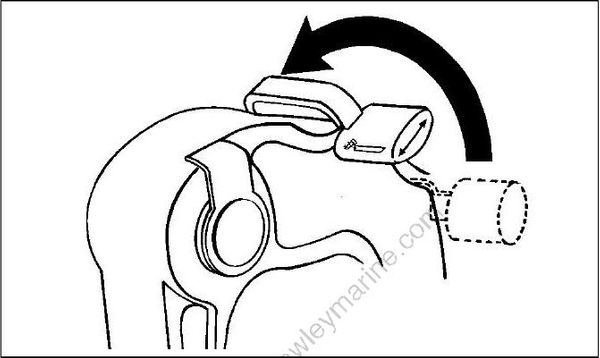
- TILT position
Grasp tilt strap or tilt grip on engine cover and tilt outboard to the full tilt position.
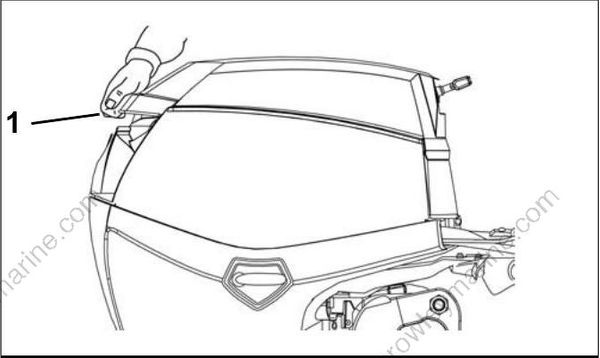
- Tilt grip
Tilt support will automatically engage.
While engine is tilted, leave tilt lever in the TILT position. When the tilt/run lever is in the RUN position, tilt support can release unexpectedly and allow motor to drop, creating a risk or serious personal injury or loss of control.
Tilt DOWN
Move tilt/run lever to RUN position.
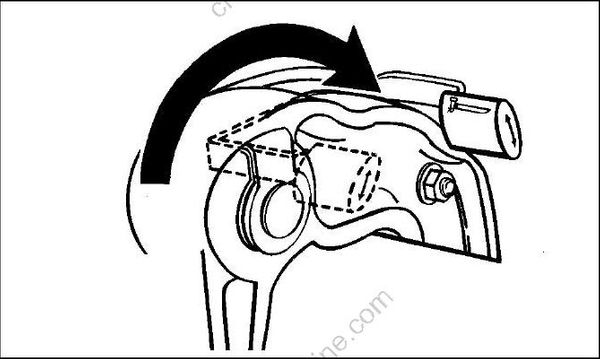
- RUN position
Grasp tilt grip on engine cover and raise outboard slightly.
Tilt support will automatically disengage.
Slowly lower outboard to its normal operating position.
Tilt Support
Engage
Raise the outboard to full TILT position. Push tilt support bracket to “lock” position.
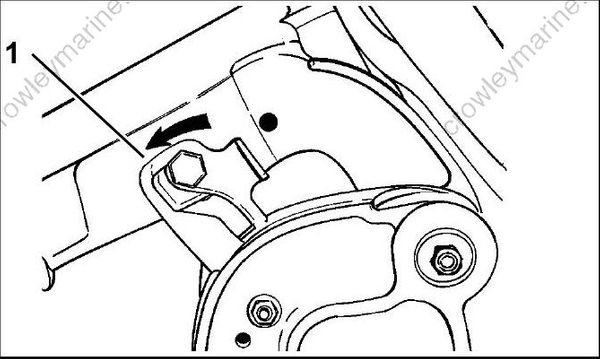
- Tilt support bracket – lock position
Disengage
Move tilt/run lever to RUN position. Tilt outboard fully and pull tilt support bracket to “unlock” position. Lower outboard.
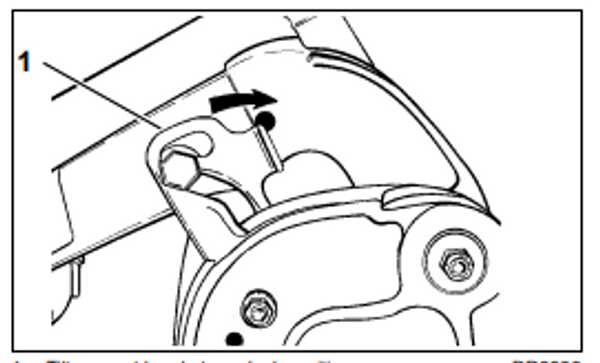
- Tilt support bracket – unlock position
Trailering
Trailer your boat with the motor in a vertical position. If your trailer does not provide adequate road clearance, support the outboard with an accessory trailering bracket.
IMPORTANT: The outboard must be restrained when trailering. Bouncing during transport may damage the outboard and the boat’s transom.
IMPORTANT: Use of the tilt support bracket when trailering may cause damage to the outboard.
MOTOR ANGLE ADJUSTMEN
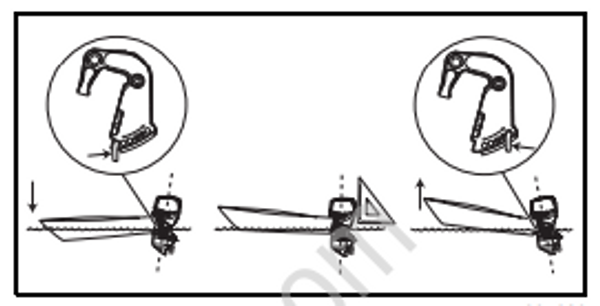
The outboard should be perpendicular to the water when the boat is underway at full speed. This adjustment can only be determined by water testing the boat. Set angle adjustment for your normal load.
Place motor in full tilt position. Refer to Tilt Support on page 50.
- Turn the angle adjusting rod handle up. Push in against spring so retainer will release, then slide rod assembly all the way out.
- Insert rod in desired position. Make sure rod passes through both stern brackets.
- Push in against spring and turn rod handle down. Make sure the retainer dropped into lock position.
In rough water or crossing a wake, excessive bow-up trim may result in the boat’s bow suddenly rising upward, possibly ejecting or seriously injuring occupants.
Some boat/motor/propeller combinations may cause boat instability and/or high steering torque when operated at high speed at or near the outboard’s trim range limits (full bow-up or bow-down). Boat stability and steering torque can also vary in changing water conditions. If any adverse conditions occur, reduce throttle and/or adjust trim angle to maintain control.
