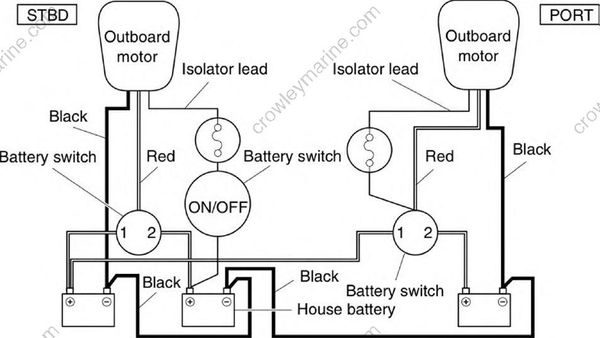
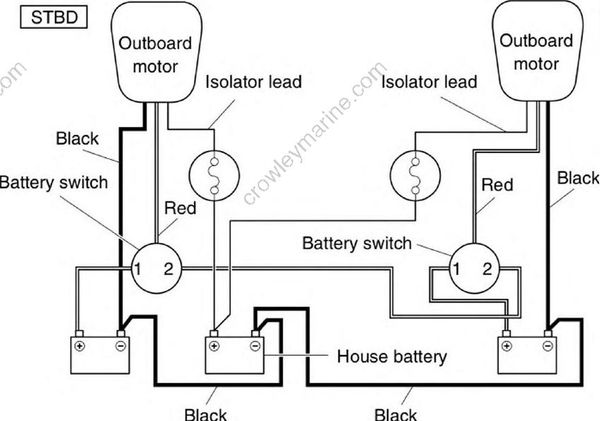
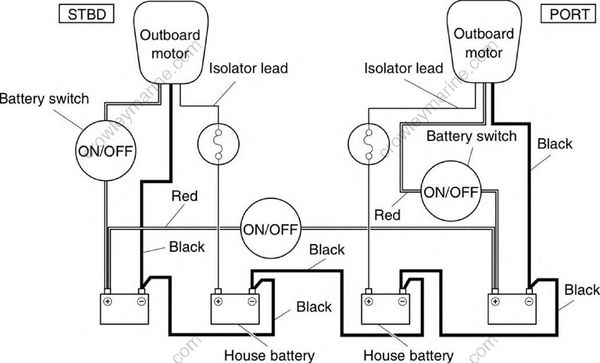
Battery installation
• Make sure to connect the battery properly and select the proper cable sizes. Otherwise, a fire could result.
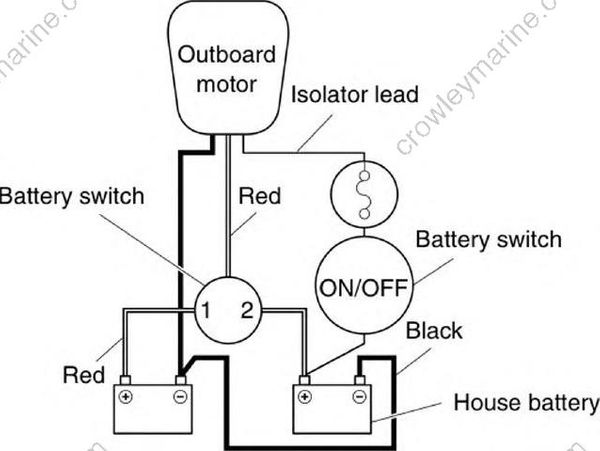
• When installing an isolator lead to the positive battery terminal or battery switch, over-cur rent protection in compliance with ABYC (E-11) must be provided.
Do not reverse the battery connections. Otherwise, the charging system could be damaged.
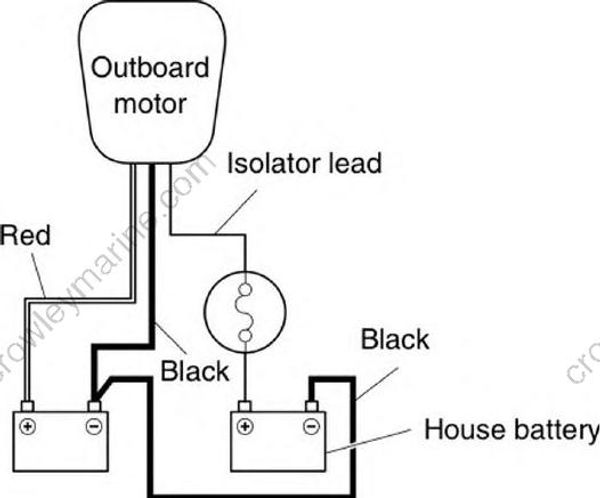
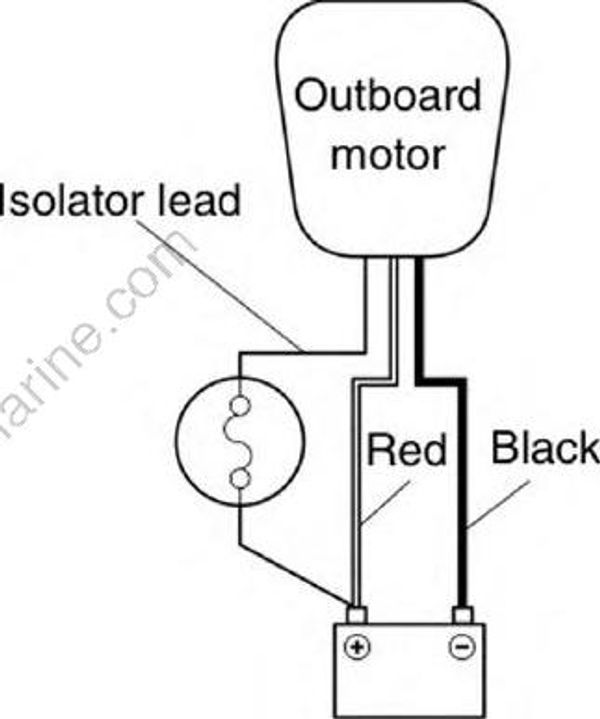
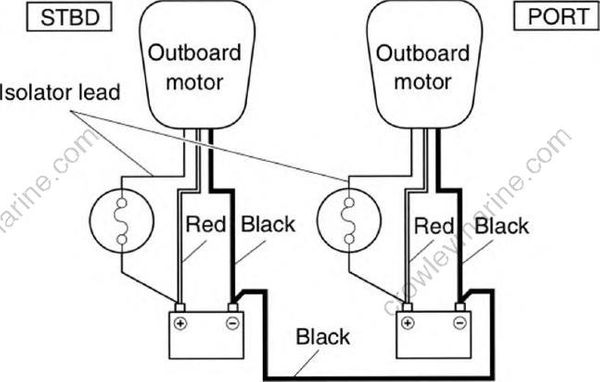
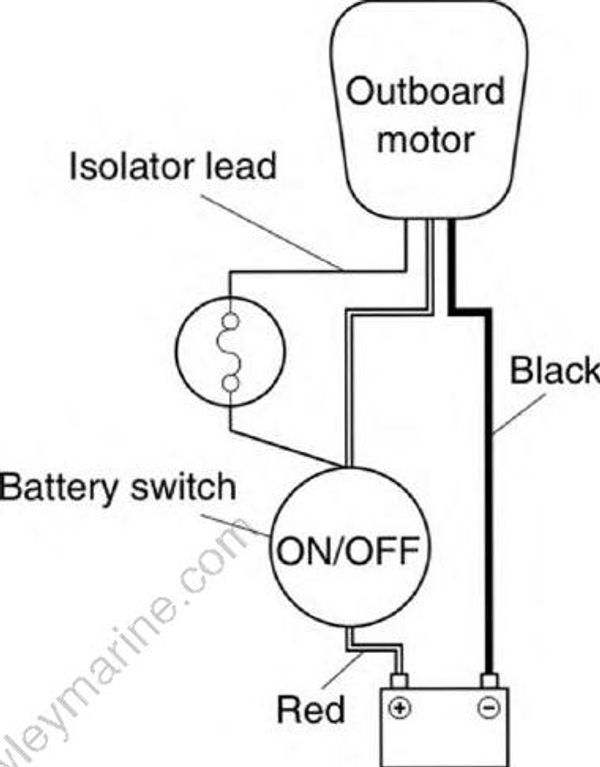
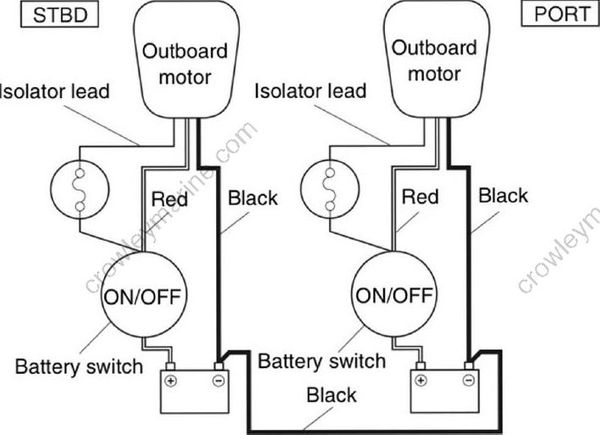
Battery cable routing without house (accessory) battery
• When only one battery is used for one engine, connect the positive battery cable and isolator lead to the positive battery terminal. If the isolator lead is left unconnected, accidental contact of the isolator lead with the negative terminal of the battery can cause a short cir cuit, which may result in a fire.
• When using a dual battery installation, a negative battery cable must be installed between both engine batteries. This cable must be sized equivalent to the engine battery cables or larger AWG cable size in accordance with ABYC specifications.
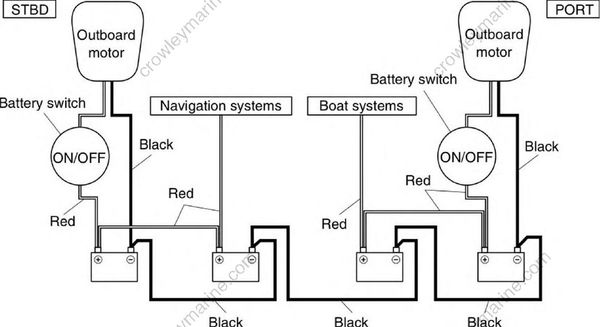
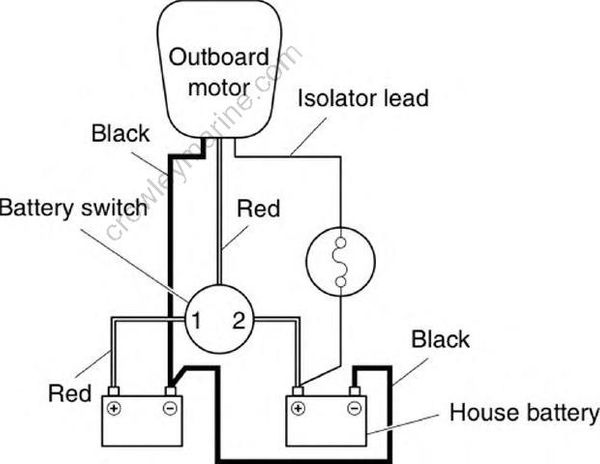
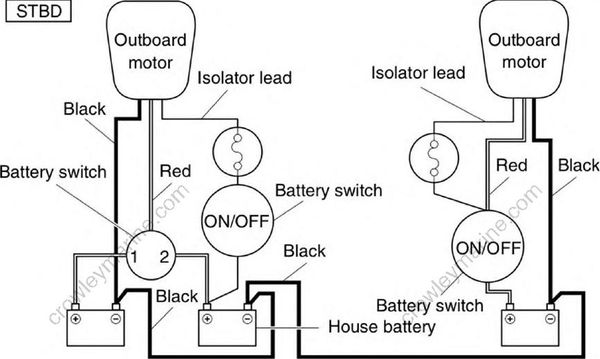
Battery cable routing with house (accessory) battery
• When only one battery is used for one engine, connect the positive battery cable and isolator lead to the positive battery terminal. If the isolator lead is left unconnected, accidental contact of the isolator lead with the negative terminal of the battery can cause a short cir cuit, which may result in a fire.
• When using a house battery, a negative battery cable must be installed between the house battery and the engine battery. This cable must be sized equivalent to the engine battery cables or larger AWG cable size in accordance with ABYC specifications.
• Battery switches must be capable of meeting intermittent and continuous current ratings for engines and accessories.