

Step 1: EXPLODED DIAGRAM
E20000-1
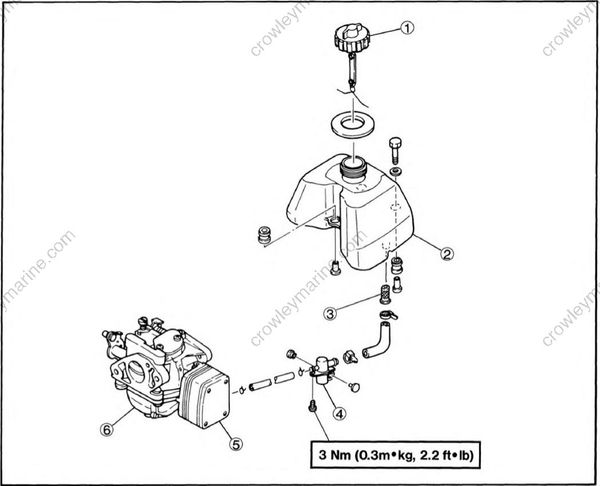
(1) Fuel tank cap
(2) Fuel tank
(3) Filter
(4) Fuel cock
(5) Fuel pump assembly
(6) Carburetor
WARNING
- Fire Prevention
Gasoline is highly flammable. Gasoline vapor is explosive if ignited. Do not smoke while handling gasoline, and keep it away from heat, sparks, and open flames. - Ventilation
Gasoline vapor is heavier than air and if inhaled in large quantities will not support life. Engine exhaust gases are harmful to breathe. When test-running an engine indoors, maintain good ventilation. - Spillage
Remember that fuel remains in the fuel hose between the fuel joint and the carburetor. Drain all remaining fuel out into a container, or soak it up with a cloth so that the fuel does not spill on to the bottom cowling. - Leaks
Failure to check for and correct fuel leaks may result in fire or explosion.
Step 2: CLEANING AND INSPECTION
E21010-0
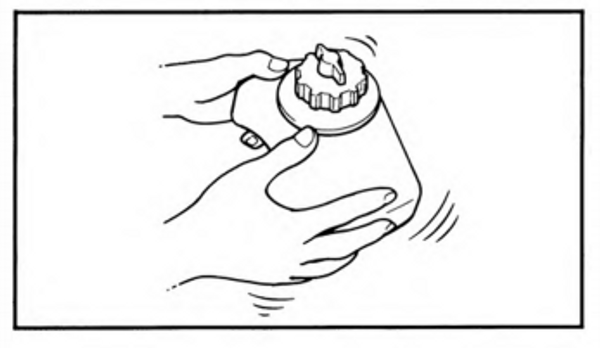
Fuel tank
1) Add a small quantity of a suitable cleaning solvent into the fuel tank and thoroughly clean the tank interior by shaking the tank.
2) Drain off the cleaning solvent completely.
E21070-0
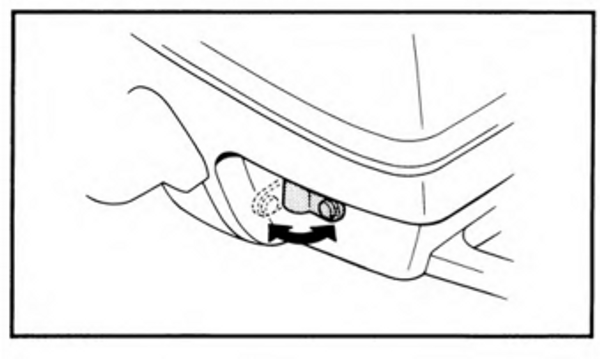
Fuel cock
1) OPEN and CLOSE the cock a few times to make sure it is in good condition. Re place if required.
E21080-0
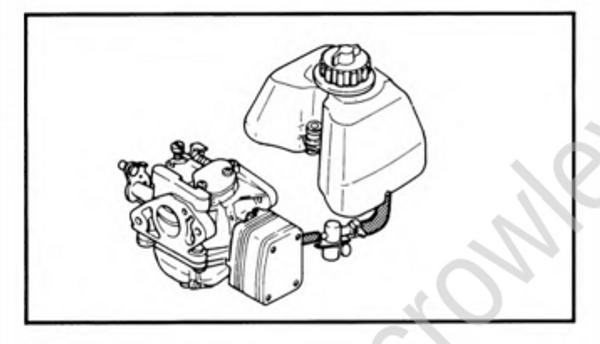
Fuel hose
1) Check the fuel hoses for cracks or holes and replace if required.
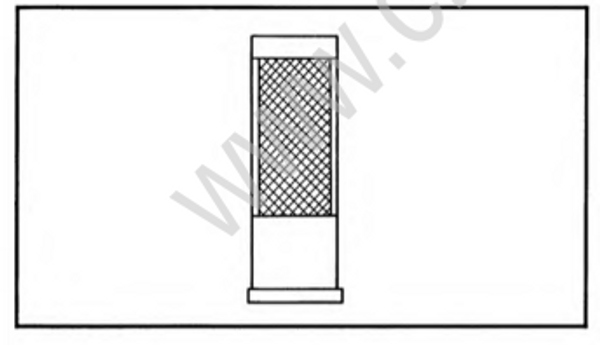
Fuel filter
1) Visually inspect the filter for cracks or damage and replace if required.
Step 3: INSTALLATION
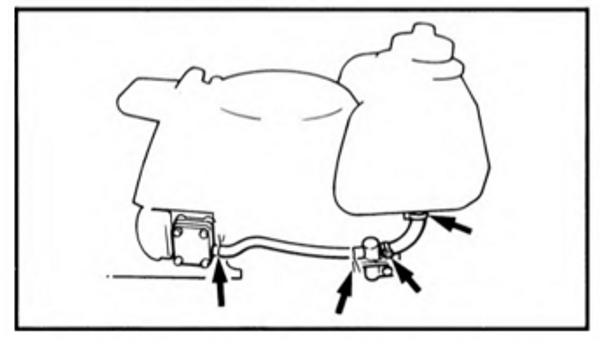
E22001-0
Referring to the diagram, install the fuel system. Note the following point:
Place the clips in position, connect the hoses, and tighten the clips. Check for leaks.
